
Oconee County Arrest Records and Charges
Oconee County arrest records begin with the agency and jail side of an event. The Oconee County Sheriff's Office operates the Oconee County Detention Center and links public users to current inmates and arrest reports through its official vendor portal. Those records can help identify the arrest date, held-for agency, custody status, and other booking details that may change fast. They are not the same thing as a final criminal case result.
Court charges after arrest begin when a warrant, ticket, complaint, indictment, or other charging record moves into Magistrate Court, Municipal Court, or General Sessions. General Sessions is the criminal division of Circuit Court, and higher criminal prosecutions in Oconee County are handled by the Tenth Circuit Solicitor. The full case file and sentence belong with Oconee County criminal court records, while jail custody and roster fields belong with Oconee County inmate records.
The Sheriff's official contact page gives the public-information and detention phone context for arrest-record questions.
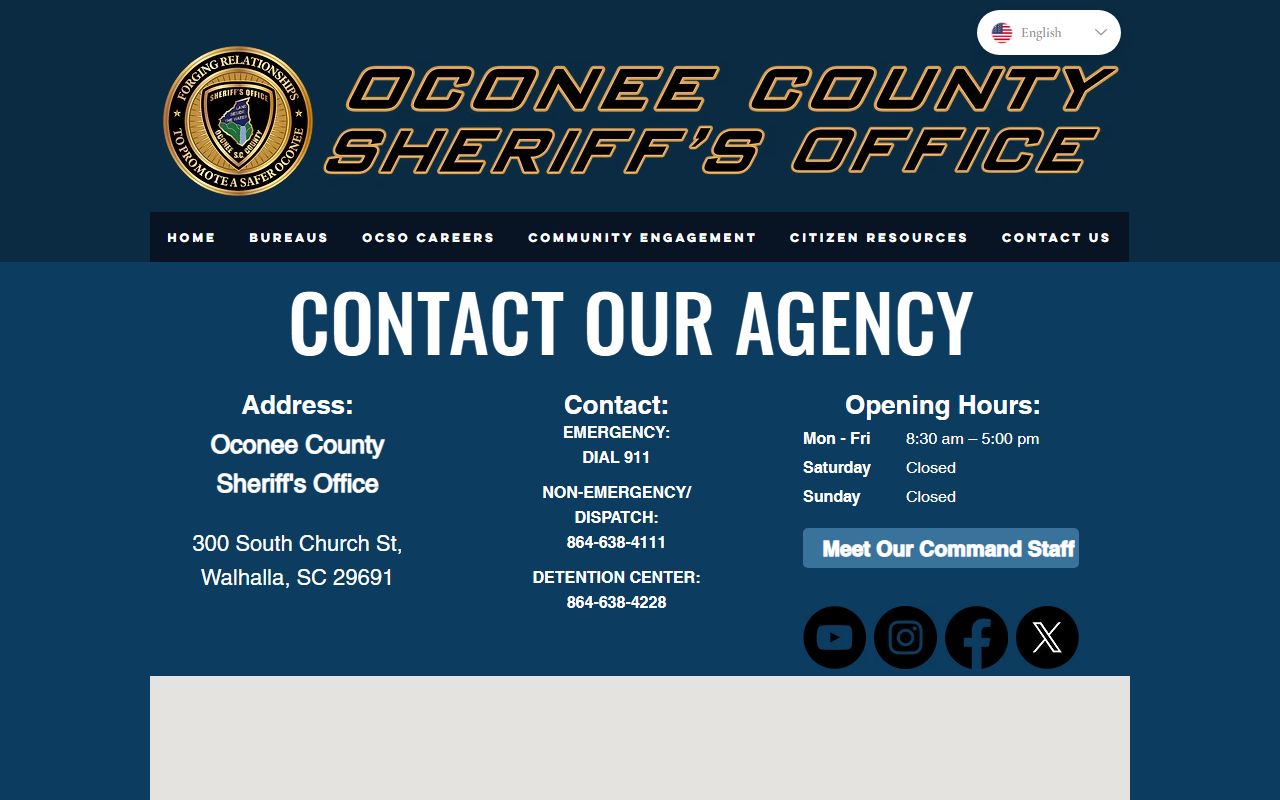
That office context matters because booking records, arrest reports, court charges, and prosecution files are held by different Oconee County agencies.
Search Oconee County Arrest Records
Start with the record type you need. Custody status and recent arrest-report material come from the Sheriff-linked Zuercher portal. Charge status and filed criminal cases are checked through the Oconee Public Index, which is the South Carolina Judicial Branch case-search route for Oconee County trial-court records. The Public Index requires the county disclaimer and security check before searches open.
- Open the Sheriff-linked arrest report or current-inmate route when the question is about booking, custody, or a recent arrest event.
- Open Oconee Public Index when the question is about filed charges, case number, hearing history, bond, disposition, or court financial information.
- Search by defendant name when the case number is unknown. Search by case number when the Clerk or Solicitor has already provided it.
- Read each charge line with the docket and disposition. One arrest can lead to more than one charge, and each charge can move differently.
- For file inspection or copy questions, use the Oconee Clerk of Court at the courthouse and bring the case number when possible.
The official vendor arrest-report portal is linked by the Sheriff's Office for public arrest-report access.
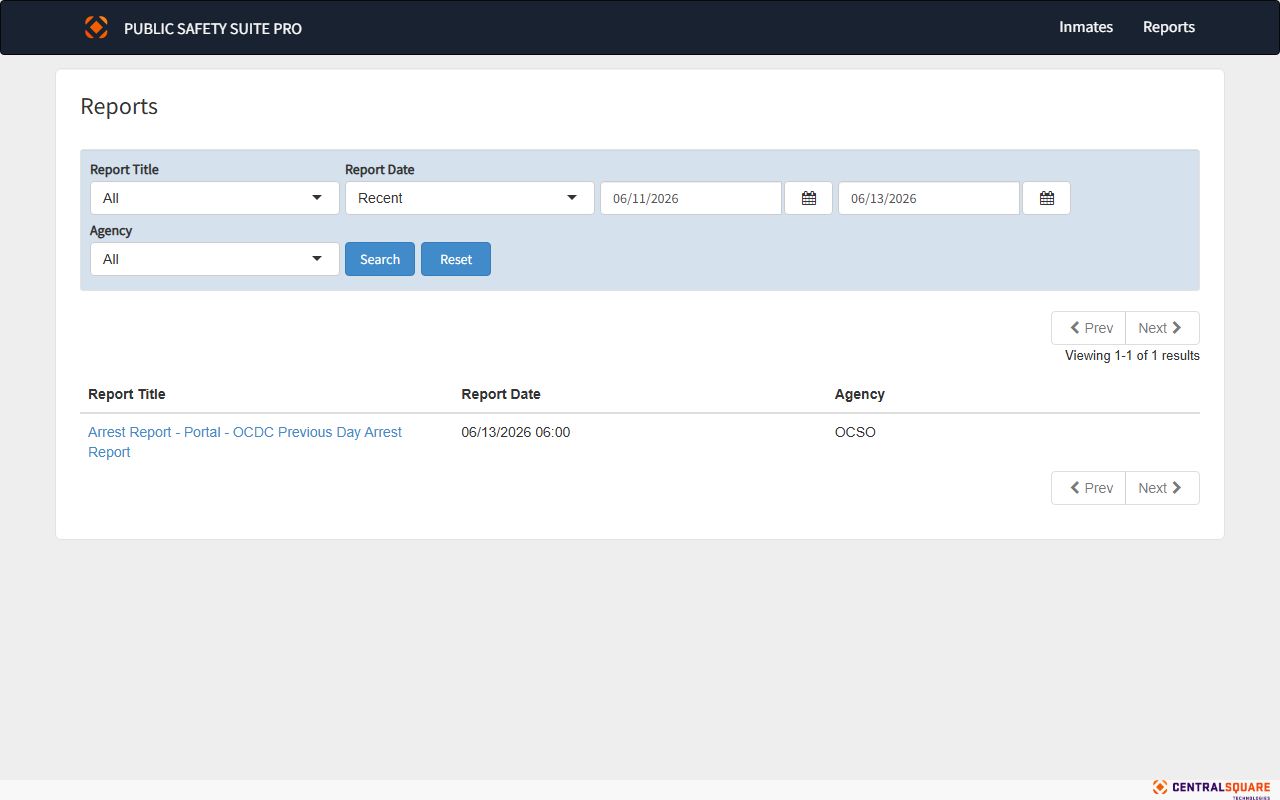
The vendor route is useful for the arrest side, but the court charge record still needs a court-index or issuing-court check.
Note: A missing online arrest report or case search result should not be treated as proof that no charge exists.
Oconee County Charges After Arrest
After an arrest, the charge record depends on the court and charge level. Magistrates can issue arrest warrants, search warrants, bench warrants, set bonds, and conduct preliminary hearings. Municipal Courts handle qualifying traffic and criminal cases inside city limits. General Sessions handles felony-level prosecutions and higher criminal matters. The Tenth Circuit Solicitor is the prosecution office for Oconee County Circuit Court criminal matters and certain Magistrate and Family Court criminal matters.
| Charging Record | Common Oconee County Use | Where It May Appear |
|---|---|---|
| Complaint or warrant | Initial lower-court criminal allegation, warrant, bond, or preliminary-hearing record. | Magistrate Court, Municipal Court, Bond Court, Public Index when indexed. |
| Information or solicitor filing | Prosecutor-controlled charging or amended-charge activity where the Solicitor's Office is involved. | Solicitor file, General Sessions docket, related court entries. |
| Indictment | Formal General Sessions charging document identified in South Carolina court-record terminology. | Circuit Court General Sessions case record. |
The Tenth Circuit Solicitor serves both Anderson and Oconee Counties and is the chief prosecution office for Circuit Court criminal matters.
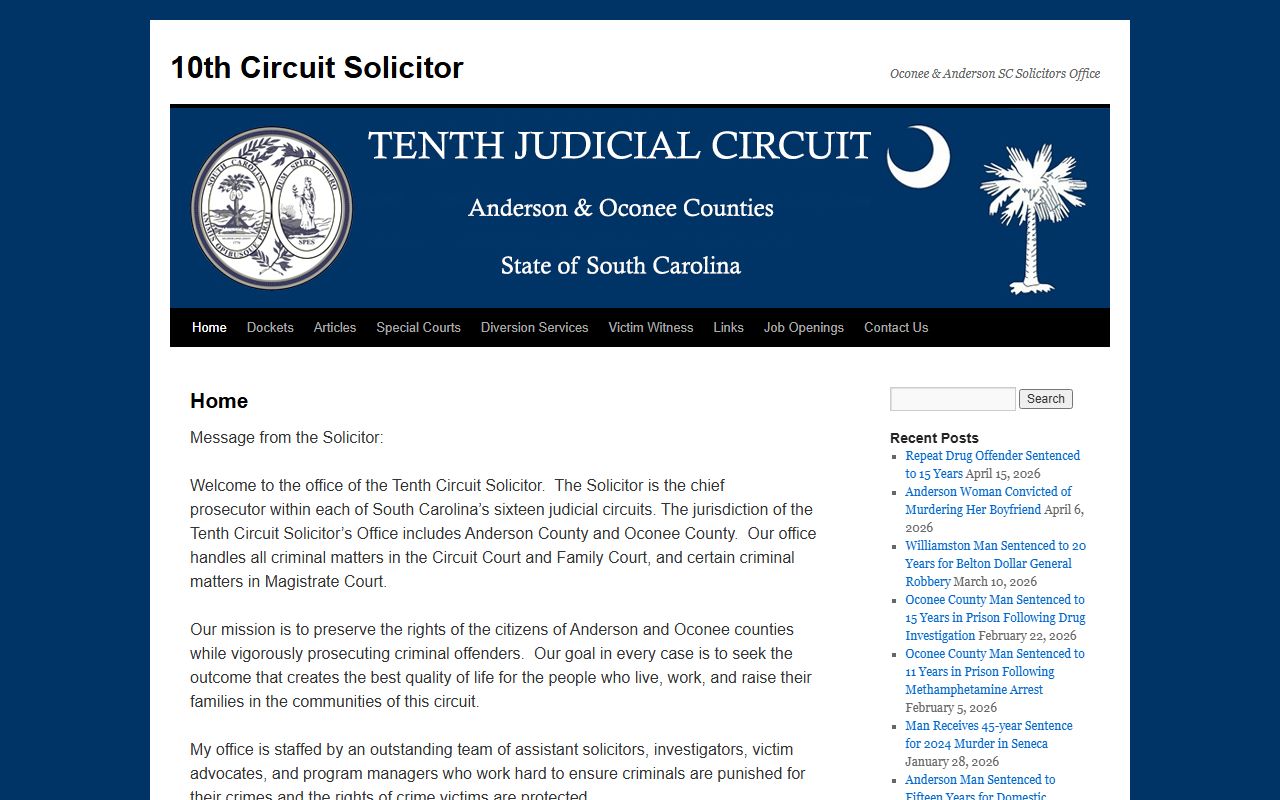
That prosecutorial role is why a Sheriff's arrest event can later look different in court if the Solicitor amends, dismisses, or diverts a charge.
Oconee County Charge Status
Charge status is the part of an Oconee County court charge record that most often changes after arrest. A Public Index case can show actions, filing dates, arrest dates when used, disposition dates, financial information, fines, fees, payments, and document icons where images are available. The Clerk's office refers to all cases by case number, so the case number is the best key for in-person review.
| Status | What It Means | Where to Check |
|---|---|---|
| Pending | The charge is open and has not reached final disposition. | Public Index docket, issuing court, Solicitor when prosecution is pending. |
| Amended or reduced | The original charge changed, often by prosecutor action or plea agreement. | General Sessions docket, Solicitor records, court actions tab. |
| Dismissed | The charge ended without a conviction on that charge. | Court disposition fields and related orders. |
| Nolle prossed | The prosecution was discontinued. The research glossary defines this as a charge the prosecution stopped pursuing. | General Sessions disposition and Solicitor context. |
Do not read a charge line as a conviction line. A court record can preserve charges that were dropped, dismissed, reduced, or resolved through a diversion route.
Oconee County Charges vs Convictions
A charge is an accusation filed after an arrest or court process. A conviction is a finding or plea of guilt. Public Index charge entries, arrest report entries, warrant references, and solicitor filings can appear before any final result exists. That timing is important for employers, landlords, licensing questions, and personal record review because South Carolina expungement and sealing rules can treat dismissed and convicted charges differently.
| Record Point | Charge | Conviction |
|---|---|---|
| Stage | Filed accusation after arrest, warrant, ticket, complaint, or indictment. | Final guilty plea, verdict, or other guilty finding. |
| Public meaning | Shows what was alleged, not what was proven. | Shows the case outcome on that charge. |
| Can change? | Yes. It may be amended, reduced, dismissed, or nolle prossed. | May be affected later by appeal, post-conviction relief, pardon, or eligible expungement. |
| Best source | Public Index, warrant or arrest report, issuing court, Solicitor. | Disposition, sentencing order, Clerk file, Public Index detail. |
South Carolina public access law allows inspection or copying of public records unless another law or exemption applies. Oconee County charge records may still be sealed, redacted, expunged, or blocked when juvenile, victim-sensitive, body-camera, medical, personal, or active-investigation limits apply.
Oconee County Charge Expungement
Expungement questions for Oconee County charges route through the Tenth Circuit Solicitor's diversion personnel in Anderson. The research file lists questions for PTI, AEP, TEP, and expungements at 864-260-4042. Oconee expungement applications are accepted during regular weekday office hours, preferably by email to oconeeexpungements@solicitor10.org, by fax, or by mail to the Anderson office.
The Solicitor's expungement instructions specifically tell Oconee users seeking warrant numbers to use Oconee Public Index by selecting Oconee County, accepting the disclaimer, entering the person's first and last name, and searching.
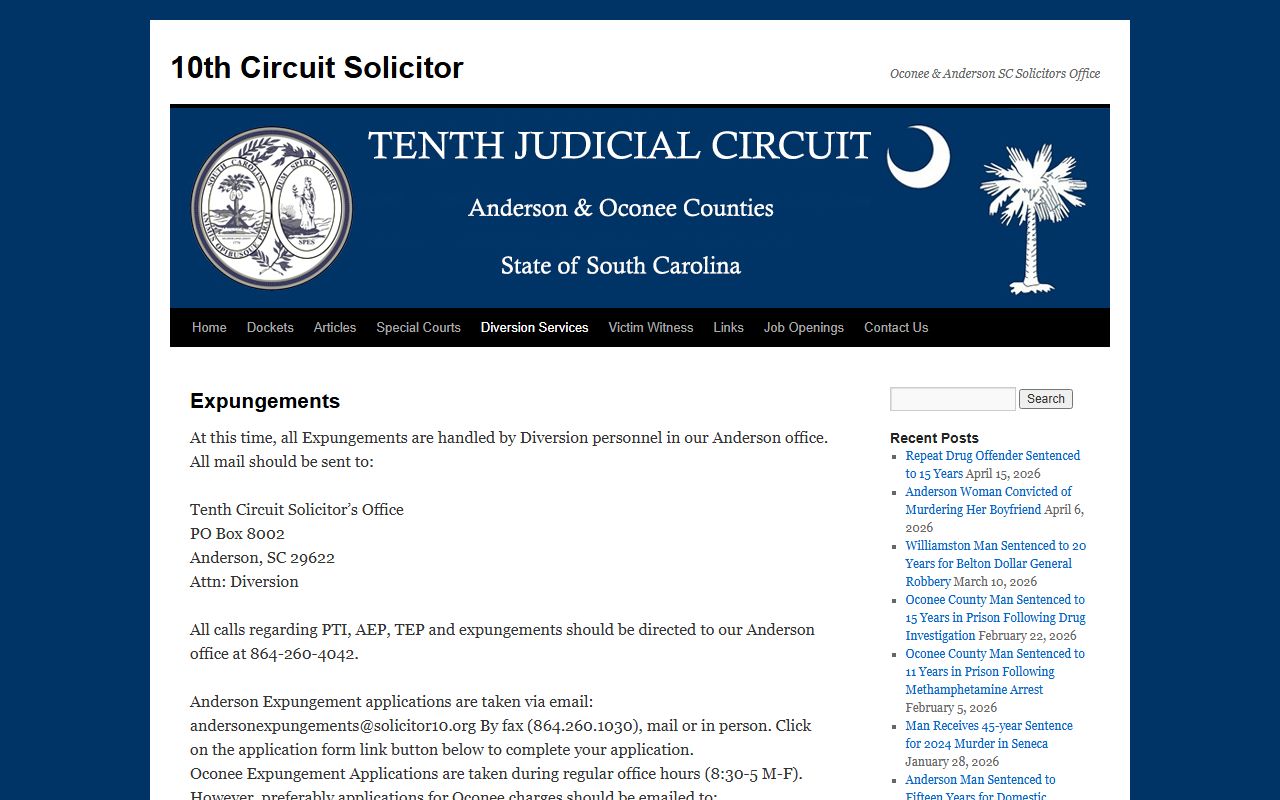
That instruction ties warrant numbers, charge records, and expungement intake back to the same Oconee County court-index route.
Key law: S.C. Code Sections 17-22-910 and 17-22-940 place criminal expungement application work with the circuit solicitor and set processing duties and fees.
Oconee County Diversion Records
Diversion can change the record path after arrest. The Tenth Circuit Solicitor's Pre-Trial Intervention program can give eligible defendants a chance to avoid a conviction record if program terms are completed and the charge is dismissed. The Alcohol Education Program is also tied to criminal-charge resolution and possible expungement outcomes for qualifying cases. These programs should be checked through the Solicitor, not through the jail roster alone.
The Solicitor's Pre-Trial Intervention page is one official source for Oconee County charge-diversion context.
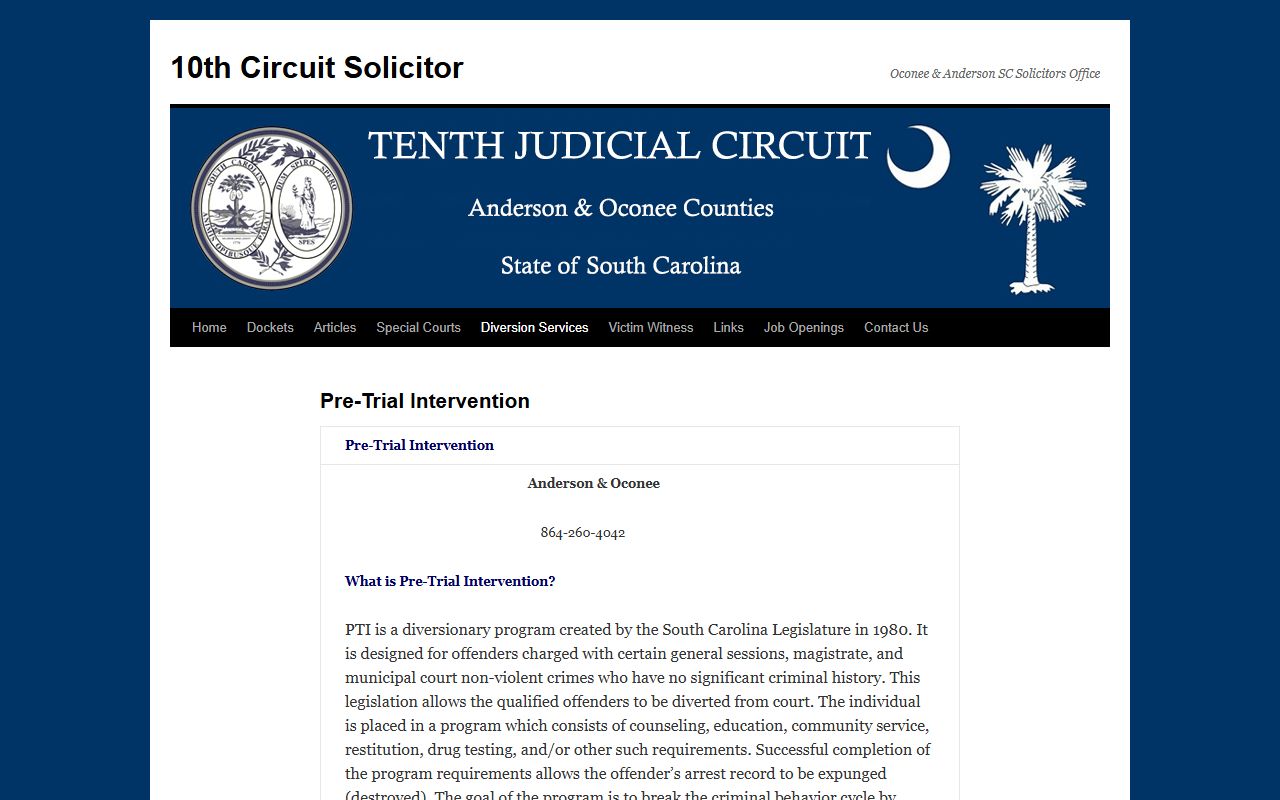
When PTI applies, the useful record question is not just whether an arrest happened, but whether the charge was dismissed and whether expungement was completed.
The Solicitor's Alcohol Education Program page is another official diversion source for eligible Oconee County charge matters.
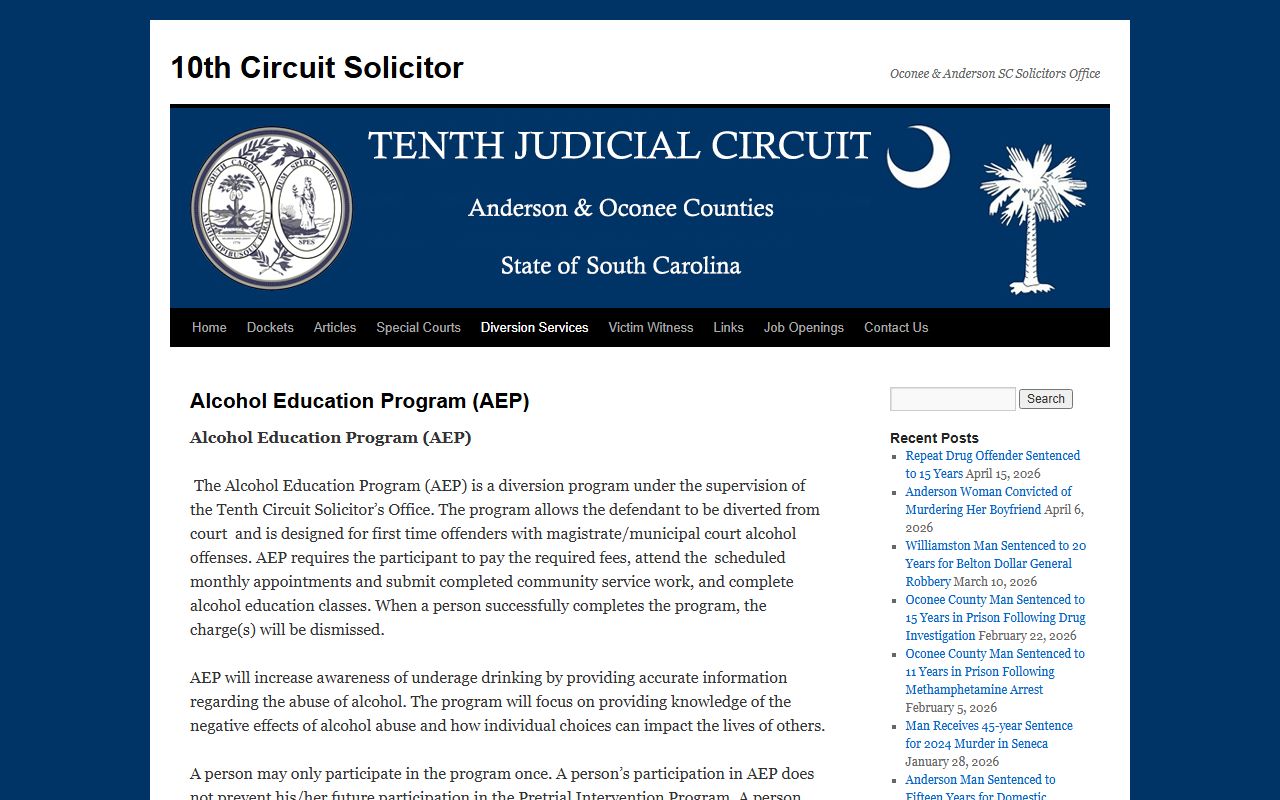
AEP context belongs on an arrest-to-charges review because a charge may end without the same public result as a conviction.
Restricted Oconee County Charge Records
Some Oconee County arrest records and court charges are not open to ordinary public search. The research identifies juvenile records, sealed records, expunged records, body-worn camera data, identifying information about certain victims, Social Security numbers, financial account numbers, home addresses, and other personal information as restricted or redacted categories. Sheriff FOIA requests also have exemptions for minors, victims, body-camera data, sealed material, and confidential records.
Use the originating office for the right record path. Sheriff FOIA is the fallback for jail or booking records not shown online. The Clerk of Court is the file-review source for Common Pleas and General Sessions cases. Magistrate and Municipal Courts should be checked for lower criminal, traffic, bond, and warrant matters. The Solicitor is the prosecution and expungement channel for many charge-record questions.
Note: Public court access does not override sealing, expungement, juvenile confidentiality, or redaction duties under South Carolina law.