
Oconee County Criminal Court Records
A criminal court record is the court case file opened after charges are filed with the proper court. In Oconee County, felony-level criminal prosecutions and higher criminal matters are handled in Court of General Sessions, the criminal division of Circuit Court. The Oconee County Clerk of Court is the local record office for those court files. Magistrate Court and Municipal Court handle many lower criminal, traffic, bond, warrant, and preliminary-hearing matters, and some of those records may appear in the Public Index or require direct contact with the issuing court.
South Carolina Circuit Court is the state's general-jurisdiction trial court. Oconee County is in Judicial Circuit 10. The Tenth Circuit Solicitor prosecutes General Sessions criminal matters and certain Magistrate, Family Court, and diversion matters. A court file is not the same thing as the arrest report or jail roster. For booking and custody status, use Oconee County inmate records. For the charge list immediately after arrest, use Oconee County arrest records and court charges.
Search Oconee County Criminal Cases
The main case-search channel is the South Carolina Judicial Branch Case Records Search, which routes Oconee searches to the county Public Index. The Public Index can be searched by case number, name, action type, date type and range, court type, court agency, case type, subtype, and party role. Criminal case users should look for General Sessions, Magistrate, or Municipal case context, then open the case number to review the docket and available disposition information.
- Choose Oconee County from the statewide case-records map or list and accept the county disclaimer.
- Complete the security check with the Validate button and open the record-search screen.
- Search by defendant name or case number, then narrow by court type, case type, date range, or party role if needed.
- Open the case number and review actions, hearing entries, charges, disposition, financial tabs, and document icons if present.
- Use the case number when asking the Clerk of Court for file viewing, certified copies, or older index help.
For criminal-history checks beyond one case file, the Tenth Circuit Solicitor's expungement page directs Oconee users to Public Index and SLED CATCH for official background checks. The Solicitor page says it cannot find warrant numbers for applicants or provide public background checks. Public Index is a court case tool; it is not a complete statewide criminal-history report.
Oconee County Criminal Case Stages
A criminal court record grows as the case moves through the court. Arrest and booking may start with the Sheriff's Office, municipal police, or another agency. Magistrates may issue warrants, set bonds, and conduct preliminary hearings. General Sessions cases are prosecuted by the Solicitor, while Magistrate and Municipal matters may stay in the summary courts unless they move or appeal.
Case flow: Charges Filed › Arraignment › Pretrial / Motions › Plea or Trial › Disposition › Sentencing
| Stage | What Happens |
|---|---|
| Charges Filed | The accusation enters court through a warrant, ticket, complaint, indictment, or other charging document. |
| Arraignment | The charge and plea are addressed, and future court dates or case settings may be entered. |
| Pretrial / Motions | Attorneys file motions, request hearings, address evidence issues, or negotiate possible resolution. |
| Plea or Trial | The defendant enters a plea or the case proceeds to trial and verdict. |
| Disposition | The case or charge reaches an outcome such as guilty, not guilty, dismissed, or nolle prossed. |
| Sentencing | The court imposes jail, prison, probation, fines, restitution, treatment, or other court terms after conviction. |
What Oconee County Criminal Records Show
Oconee County criminal court records may contain the case number, court agency, case type, defendant name, party role, charge information, arrest date where applicable, docket entries, hearing dates, motions, disposition dates, financial obligations, fines, fees, and payments. Public Index document icons may show images when available, but images are not available in every county or case. The Clerk of Court remains the copy channel when the online entry is not enough.
| Field | What It Shows |
|---|---|
| Case Number | The court identifier needed for search, docket review, and Clerk copy requests. |
| Defendant | The person charged in the criminal case. |
| Court Agency | Whether the record is tied to General Sessions, Magistrate Court, Municipal Court, or another court office. |
| Charges | The alleged offenses filed in court, which may later be amended, reduced, dismissed, or resolved. |
| Plea | The defendant's formal response, such as guilty, not guilty, or another recognized plea entry. |
| Docket Actions | Motions, hearings, orders, filings, roster events, and other chronological case activity. |
| Disposition | The outcome or current resolution of a charge or case. |
| Sentence | The punishment or court order imposed after conviction, including probation or financial terms when shown. |
Oconee County Criminal Case Offices
The Tenth Circuit Solicitor's Oconee contact page identifies the local prosecution office. The Solicitor is the chief prosecutor for Anderson and Oconee Counties and handles General Sessions criminal prosecutions, Family Court criminal matters, and certain Magistrate Court matters. The Oconee office phone is 864-638-4294, and the Oconee office uses 205 W. Main St. in Walhalla with entrance on Short Street.
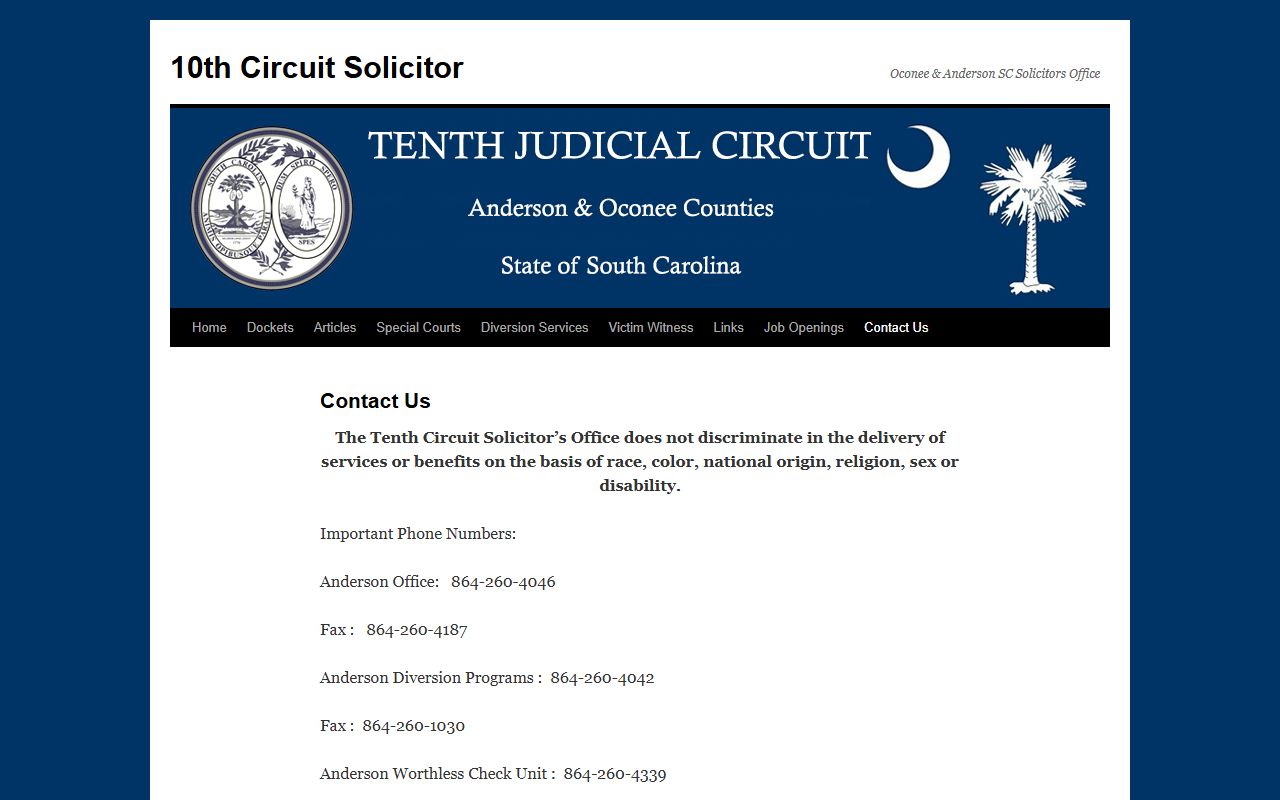
The Solicitor's role matters because prosecution filings, diversion, victim-witness notices, and expungement processing can affect what a criminal case record shows.
The SCCID Oconee public-defender listing and the Tenth Circuit Public Defender local page provide the defense-side contact path.
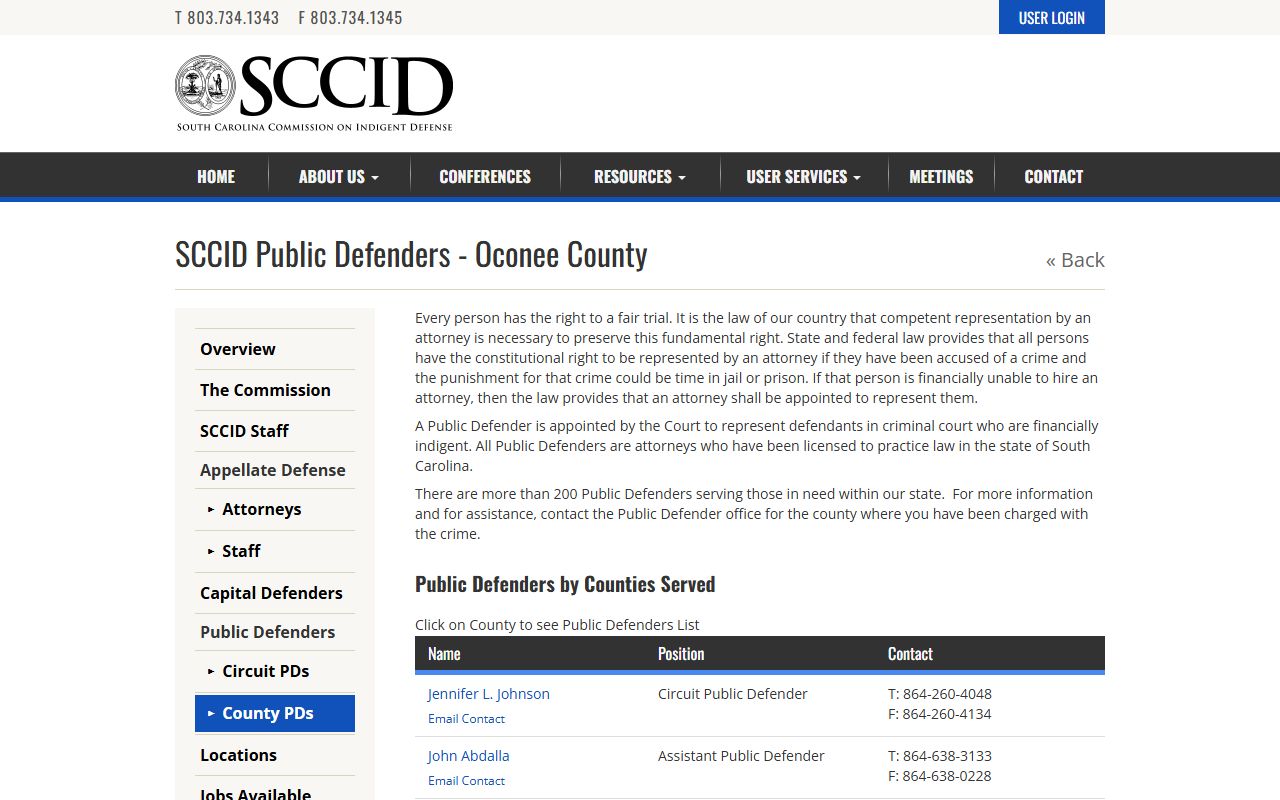
The SCCID listing gives Oconee-specific public defender names and local contact numbers, which helps defendants identify the appointed-counsel channel tied to a pending criminal case.
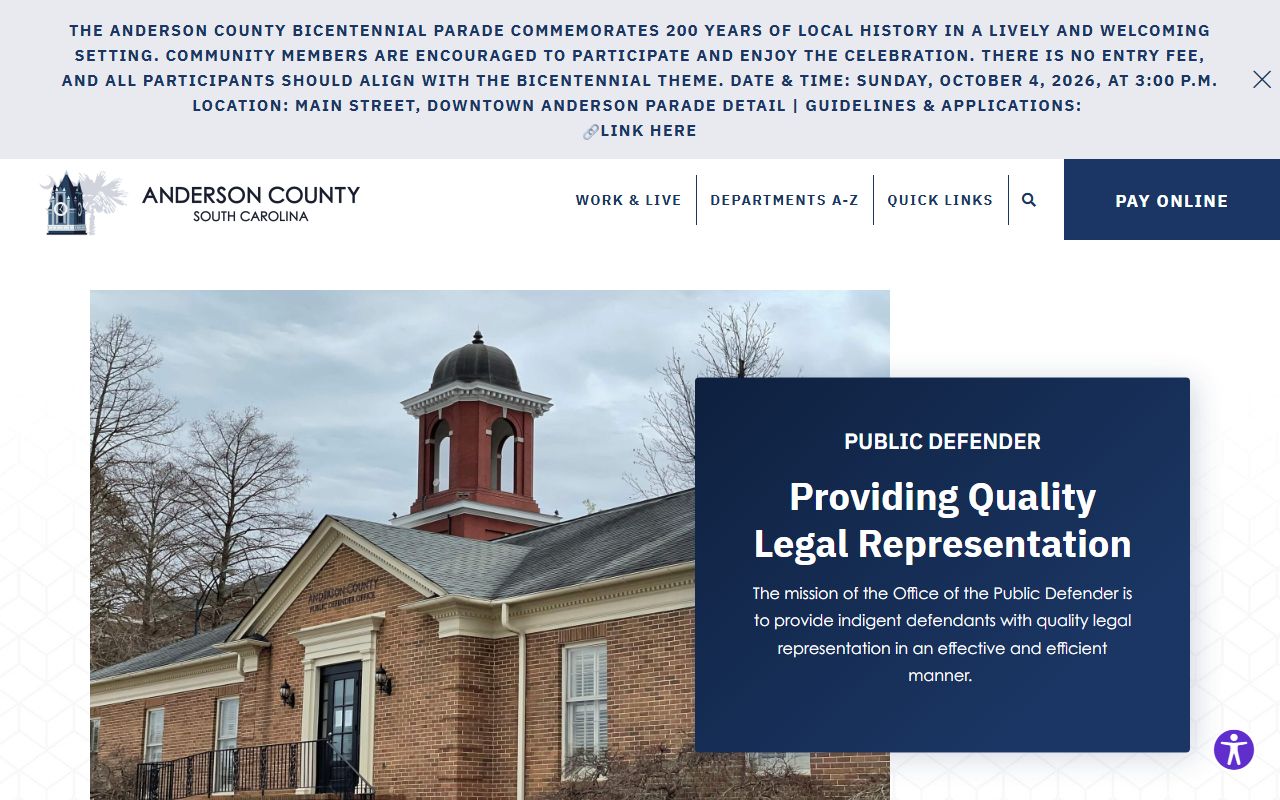
The Public Defender page adds practical limits: out-on-bond applicants bring warrants, tickets, citations, and proof of income to the Clerk of Court where the charge is pending, and the office is not appointed to Oconee municipal cases at this time.
Oconee County Charges vs Convictions
A charge is an accusation filed in court. A conviction is an outcome after a guilty plea, verdict, or other finding of guilt. Oconee County criminal court records can show charges that are pending, amended, reduced, dismissed, nolle prossed, or resolved by plea or trial. Reading only the charge name can be misleading without checking the disposition and sentence fields.
| Charge | Conviction | |
|---|---|---|
| Stage | Accusation or filed offense. | Finding, verdict, or plea of guilt. |
| Proof Standard | May begin with probable cause or a charging decision. | Requires proof beyond a reasonable doubt or a valid guilty plea. |
| Record Meaning | Can be dropped, dismissed, reduced, or nolle prossed. | Can trigger sentencing, probation, fines, restitution, or collateral effects. |
| Where to Confirm | Charge list and docket actions. | Disposition, plea, judgment, and sentencing entries. |
Oconee County Sealed vs Expunged Records
Restricted criminal records are handled carefully under South Carolina law. A sealed record is hidden from ordinary public inspection but may still exist for authorized legal access. An expunged record is removed, destroyed, or treated as no longer publicly available under the expungement order and statute. The practical effect depends on the charge, outcome, court order, and agency holding the record.
| Sealed | Expunged | |
|---|---|---|
| Visibility | Not open to ordinary public inspection. | Removed from public access under an expungement order. |
| Record Status | The file may still exist under court control. | Eligible records are removed, destroyed, or treated as legally cleared as ordered. |
| Typical Access | Court order or authorized legal channel. | Handled through solicitor, clerk, SLED, and court distribution rules. |
| Oconee Path | Contact the court that sealed the case. | Use Tenth Circuit Solicitor diversion personnel for Oconee expungements. |
Oconee County Criminal Expungement Records
South Carolina expungement applications are administered by the solicitor's office in the circuit where the charge originated under S.C. Code Section 17-22-910. Oconee charges go through Tenth Circuit Solicitor diversion personnel. Applications may be emailed to oconeeexpungements@solicitor10.org, faxed to 864-260-1030, mailed to the Anderson office at PO Box 8002, Anderson, SC 29622, Attn: Diversion, or handled in person during regular office hours. Questions for PTI, AEP, TEP, and expungements go to 864-260-4042.
The SC Judicial Branch expungement process gives the statewide court-system route for clearing eligible Oconee County criminal court records.
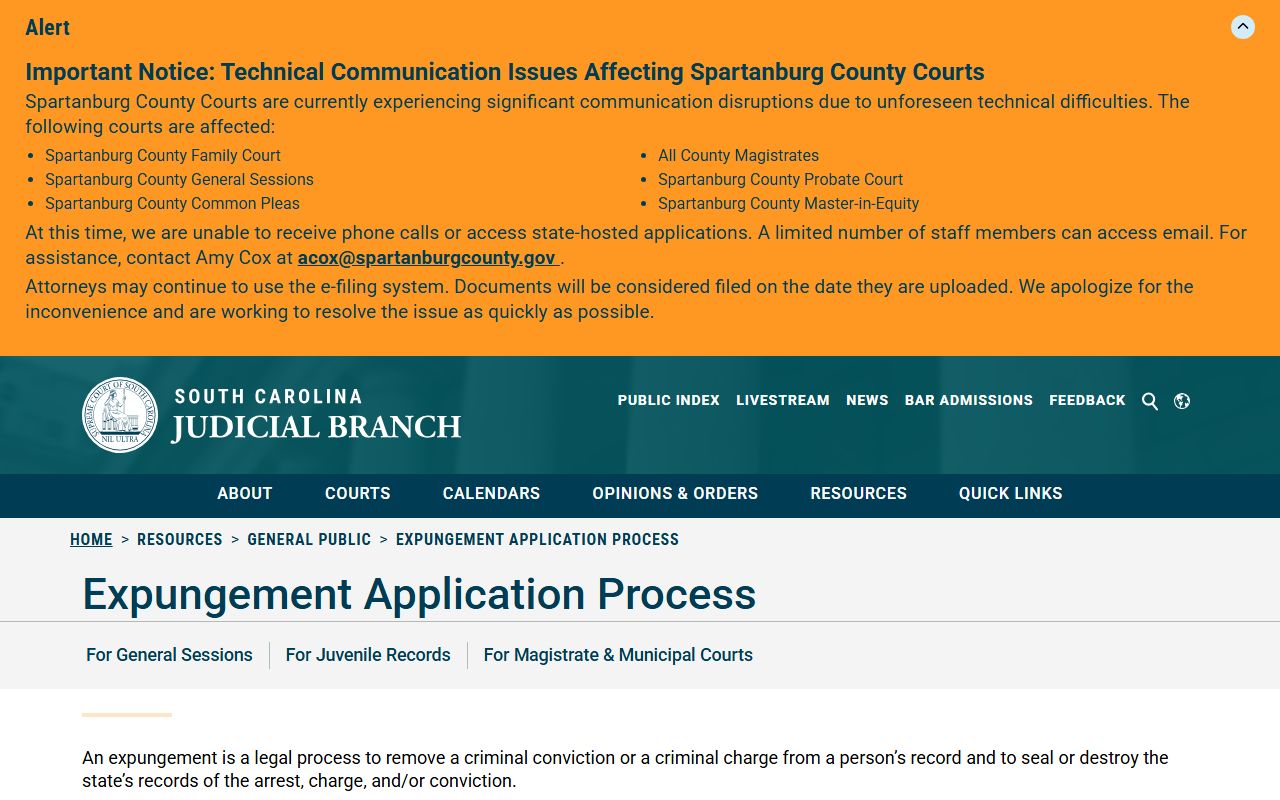
The statewide process page gives the court-system context, while Oconee applications are routed through the Tenth Circuit Solicitor.
The South Carolina expungement statutes set the statutory process behind Oconee criminal-record expungement requests.
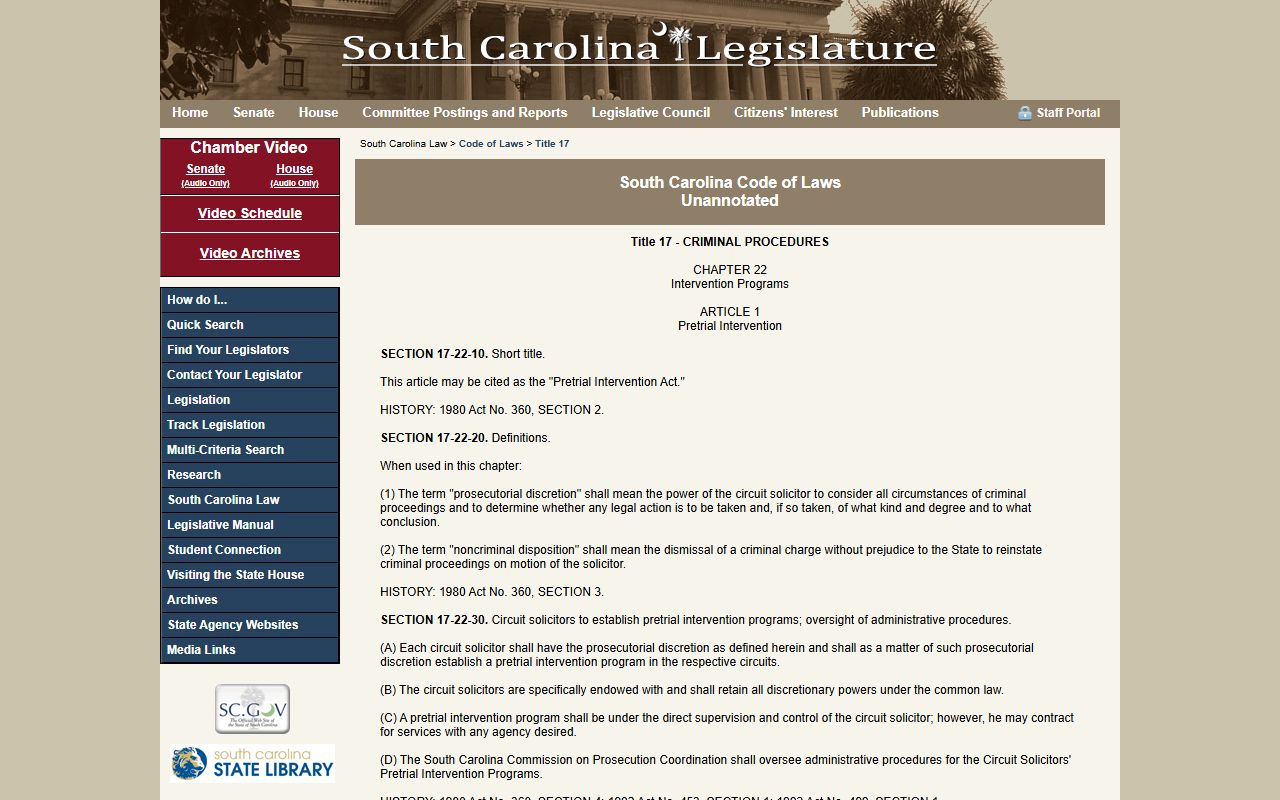
Section 17-22-940 covers processing fees, solicitor and SLED verification duties, and distribution of expungement orders.
Oconee County Criminal Records Access
Criminal court records are generally public unless a sealing order, expungement, juvenile rule, victim-protection rule, privacy statute, or other exemption applies. S.C. Code Section 30-4-30 gives the general right to inspect and copy public records. Section 30-4-40 permits exemptions and redactions. Court records also follow court rules and case-specific orders.
Key Statutes:
S.C. Code Section 17-22-910 - expungement applications are handled by the solicitor in the circuit where the charge started.
S.C. Code Section 17-1-40 - certain dismissed, not-guilty, or non-prosecuted records may be retained but sealed or nonpublic.
S.C. Code Section 63-19-2050 - eligible juvenile status-offense and nonviolent records may be expunged if statutory conditions are met.
The South Carolina dismissed-charge retention and sealing statute addresses records from certain dismissed, not-guilty, or non-prosecuted charges.
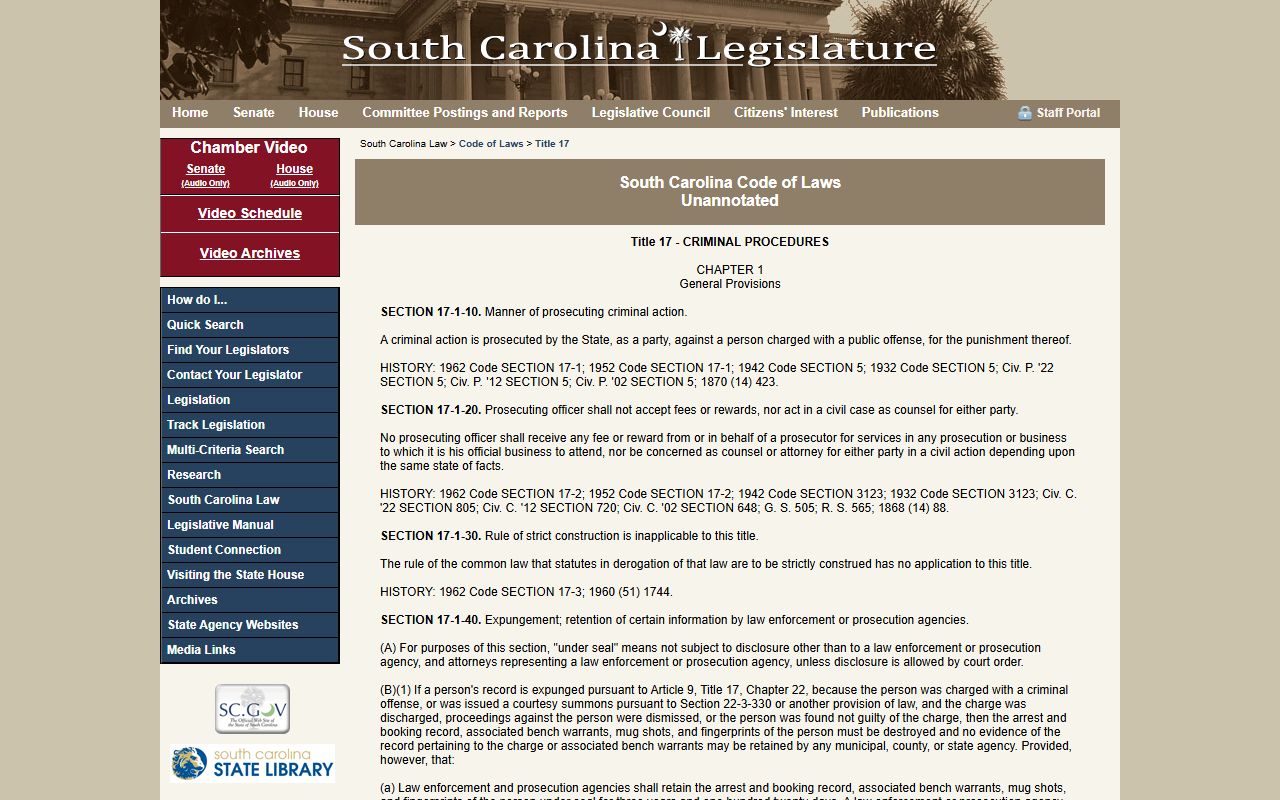
That statute is central when a case ended without conviction but related law-enforcement or prosecution material is retained under nonpublic rules.
Oconee Criminal Background Check Limits
Oconee County criminal court records are case records. They can help confirm a court filing, disposition, sentence, or docket event, but they are not a full consumer background check. A complete official criminal-history search may involve SLED CATCH or other authorized channels. The Tenth Circuit Solicitor specifically directs users to Public Index and SLED CATCH for official background checks and says it cannot hand out public background checks.
Important: Court case lookup is not an FCRA consumer report and should not be used for regulated screening decisions.
Restricted Oconee County Criminal Records
Juvenile records are confidential and available only by court order to people with a legitimate interest, with counsel access for the child. Juvenile identifying information generally cannot be released to the media unless a statutory exception applies. Criminal sexual conduct victim names are protected. Body-worn camera data is not a FOIA public record under the statute cited by the Oconee Sheriff, though it may be available through criminal or civil procedure or court order.
Search results also have redaction limits. The South Carolina Judicial Branch states that home addresses no longer appear on Public Index cases as of January 1, 2026. Sealed cases, expunged matters, active investigations, victim-sensitive records, and protected personal information may be withheld or redacted. A missing online result should not be treated as proof that no case, sealed record, warrant, or restricted matter exists.